PDLC — Polymer Dispersed Liquid Crystal — is the technology that makes it possible to transform a glass surface from see-through to frosted at the push of a button. But what lies behind the abbreviation? In this guide, we explain the technology from the ground up, step by step, without assuming prior knowledge.
What Does PDLC Mean?
PDLC stands for Polymer Dispersed Liquid Crystal. It describes exactly what the material is: microscopic droplets of liquid crystals evenly dispersed throughout a solid polymer matrix.
Liquid crystals are materials that exist in a state between solid and liquid. They have an ordered molecular structure like a solid, but can flow like a liquid. It's this dual nature that makes them so useful — their optical properties can be changed using electricity.
How Does PDLC Work Physically?
A PDLC film consists of a thin layer (typically 30–80 micrometres) of liquid crystals embedded in a polymer. The film is placed between two transparent electrode layers (ITO — indium tin oxide) that can conduct electricity without blocking light.
Without Power (Frosted State)
When no voltage is applied, the liquid crystals lie in random orientations within their polymer droplets. Since each droplet has a different refractive index than the surrounding polymer matrix, incoming light is scattered in all directions. The result is that the film appears frosted and opaque — similar to sandblasted glass. You can still perceive contours and light passes through, but detailed visibility is effectively blocked.
With Power (Transparent State)
When an alternating voltage (60 V AC at 50 Hz with our transformers; 45 V AC versions exist) is applied across the electrodes, an electric field is created. The crystal molecules, which have a natural tendency to align along field lines, orient themselves in parallel. In this state, their refractive index matches that of the polymer matrix, and light passes straight through without scattering. The film becomes see-through — with light transmission of up to about 85%. A slight haze always remains, most visible in angled light.
The switching occurs in under 100 milliseconds — faster than a blink. There are no moving parts, no mechanical wear and no sound. It's pure physics.
PDLC Film Construction — Layer by Layer
A complete PDLC film is built from several functional layers working together:
The outermost layer protecting against scratches and mechanical impact. Can be UV-treated to extend the film's lifespan.
A transparent, conductive coating that distributes electrical voltage evenly across the film's surface. ITO is the most common transparent conductor, also used in touchscreens and solar cells.
The polymer matrix with embedded liquid crystal droplets. This is the heart of the technology — the layer that actually changes light transmission based on electrical signal.
Same transparent conductor layer as above, completing the circuit.
On self-adhesive variants, an optically clear adhesive (OCA) attaches the film directly to existing glass. This makes retrofit installation possible without replacing the entire glass panel.
The total thickness of a complete PDLC film is typically 400–600 micrometres — thinner than a credit card.
Technical Specifications
Premium PDLC film supplied by Glasnova has the following properties:
Transparent state: 83–85% light transmission
Frosted state: ~55% light transmission, 0% visibility
Operating voltage: 60 V AC (45 V AC version available)
Frequency: 50 Hz
Power consumption: < 3 W/m²
Response time: < 100 ms
Operating temperature: -20°C to +60°C
A 10 m² surface thus consumes approximately 30 watts — roughly the same as a laptop in sleep mode. PDLC film only consumes power in transparent mode; in frosted mode (default), consumption is zero.
Two Variants: Laminated and Self-Adhesive
Laminated PDLC
The PDLC film is laminated between two glass panels during the manufacturing process, similar to laminated safety glass. This provides a permanent, integrated solution with high durability.
Best for: New construction, glass partitions, doors and facades where you're designing from scratch.
Self-Adhesive Smart Film
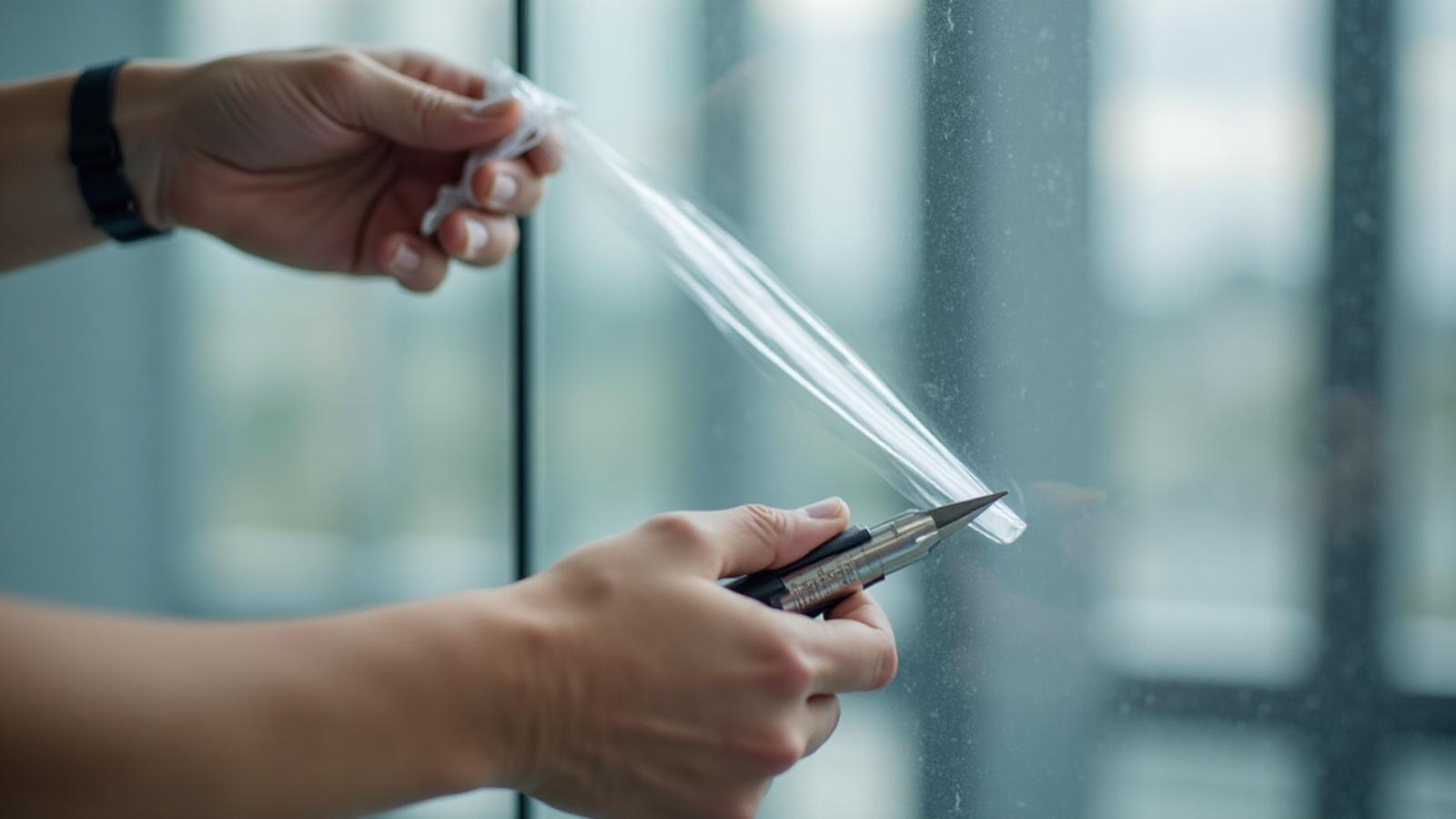
The film comes with optically clear adhesive on one side and is applied directly to existing glass — just like a window film. No glass needs to be replaced.
Best for: Existing glass walls, windows, shower walls and any project where you want to upgrade without reconstruction.
Where is PDLC Used in Practice?
PDLC technology has evolved from a luxury product to an established tool in architecture, healthcare and residential settings. Here are the most common applications in Sweden today:
Offices and Conference Rooms
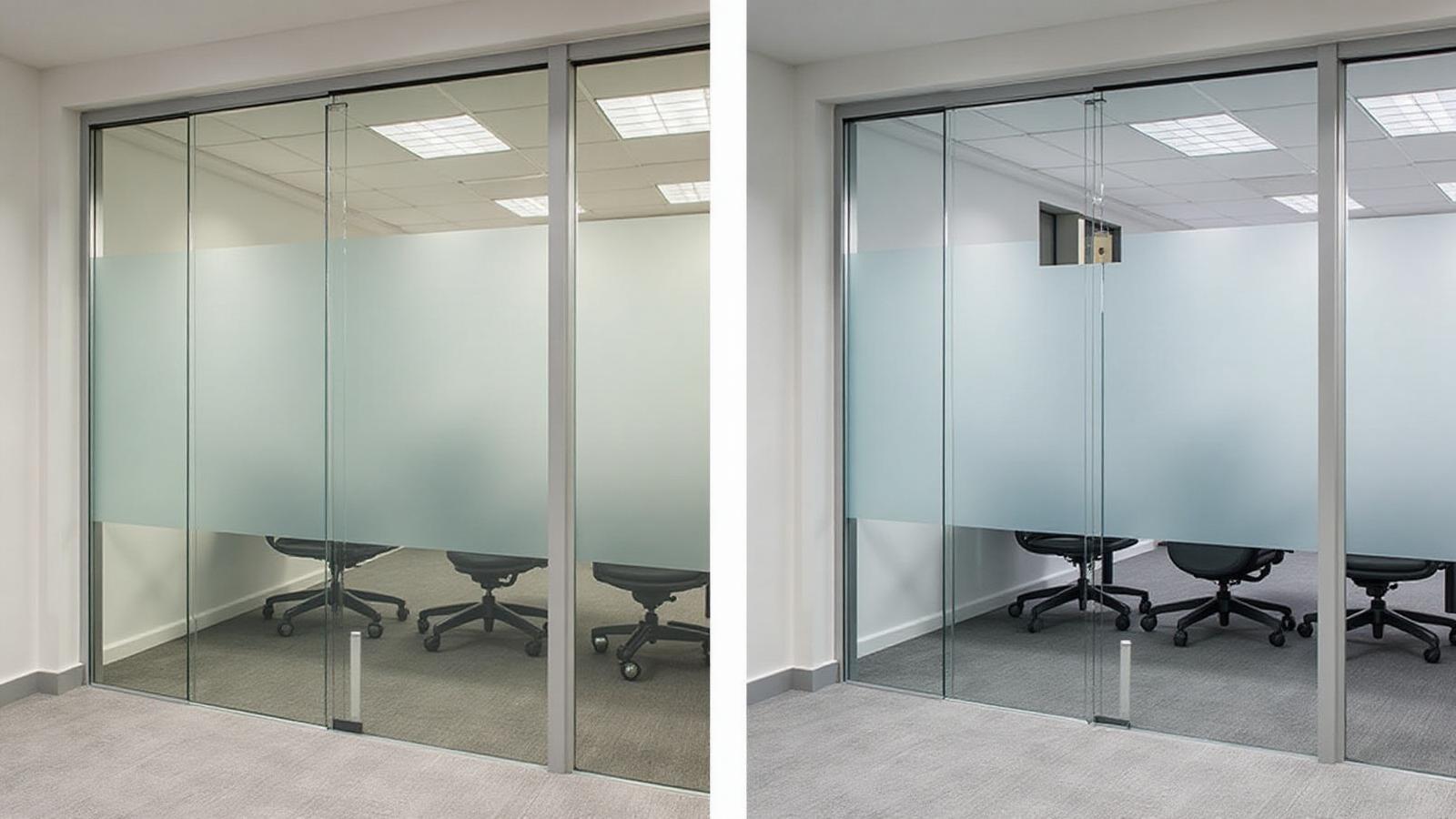
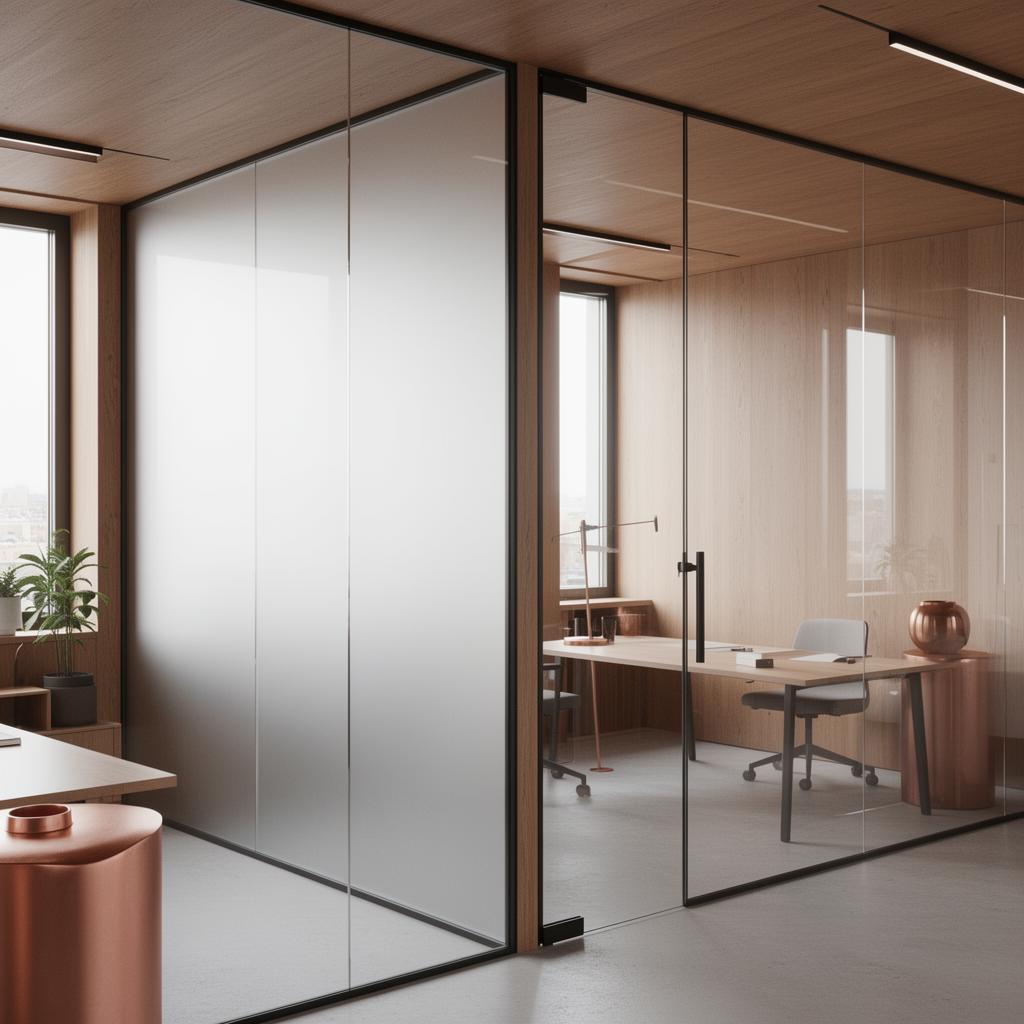
By far the most common use case. Glass partitions in open-plan offices that can instantly create private meeting rooms. Instead of pulling curtains or blinds, you activate the film with a button — and the room becomes private. When the meeting ends, the glass returns to transparent and the open landscape is preserved.
Hospitals and Healthcare
PDLC replaces textile curtains in patient rooms, operating theatres and consultation rooms. The benefit is twofold: better hygiene (no textiles collecting bacteria) and better functionality (staff can see in when needed, switch off for patient privacy).
Bathrooms and Spa
Shower walls and bathroom windows that are transparent during cleaning and frosted during use. It provides a luxurious, hotel-like feel at home and solves the privacy problem without compromising on light or design.
Retail and Display Windows
Shop windows that switch function: transparent to showcase products during opening hours, frosted as a projection surface for advertising or privacy screen after closing. PDLC in frosted mode functions as a rear-projection screen with 180° viewing angle.
Summary
PDLC technology represents a fundamental shift in how we interact with glass as a building material. From being a static, passive surface, glass becomes an active component that can be adapted to situation and need — privacy, light control, projection and UV protection in a single product.
The technology is mature, proven and accessible. Power consumption is negligible, lifespan is long and installation — especially with self-adhesive film — is simpler than most people think.