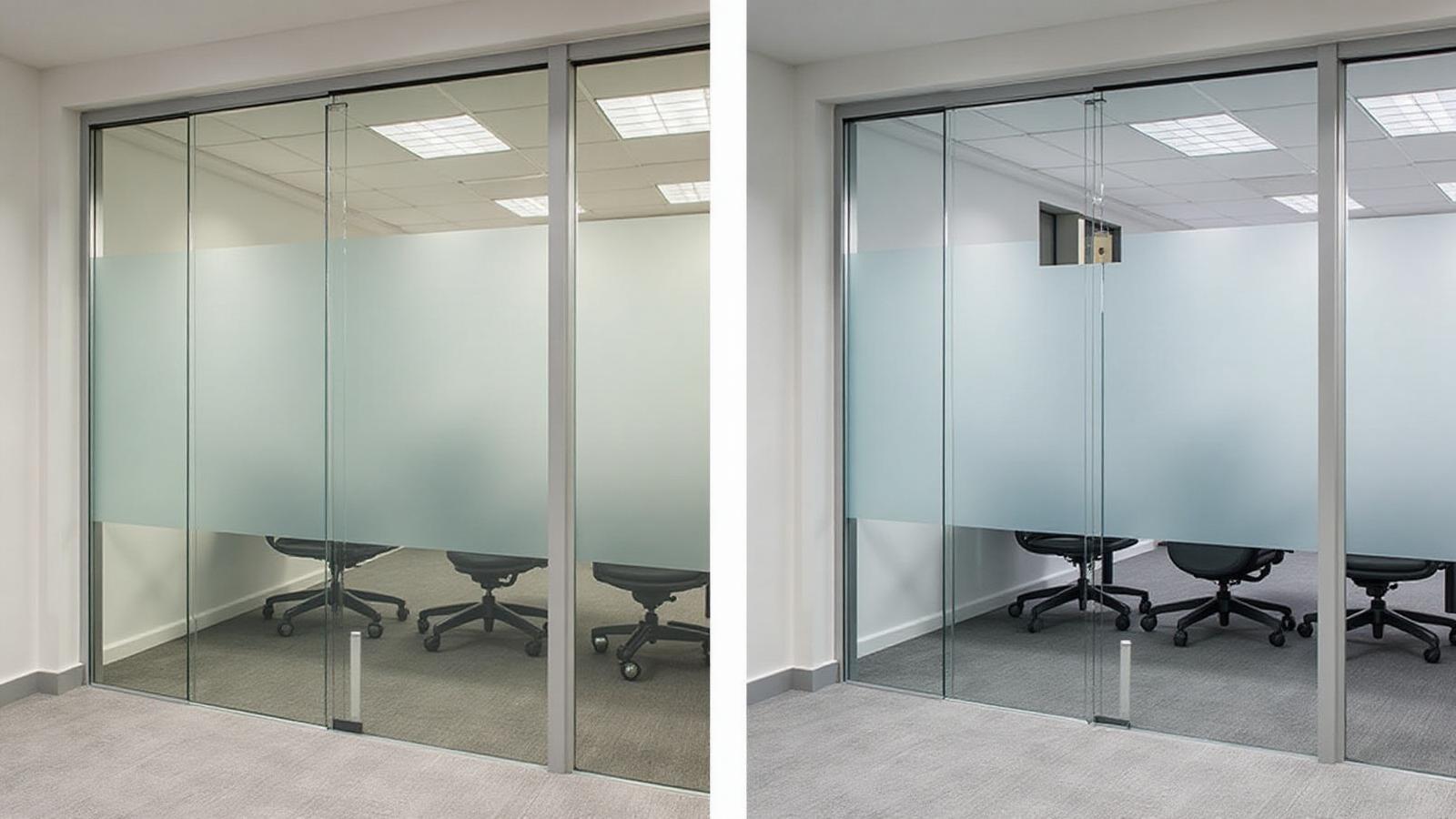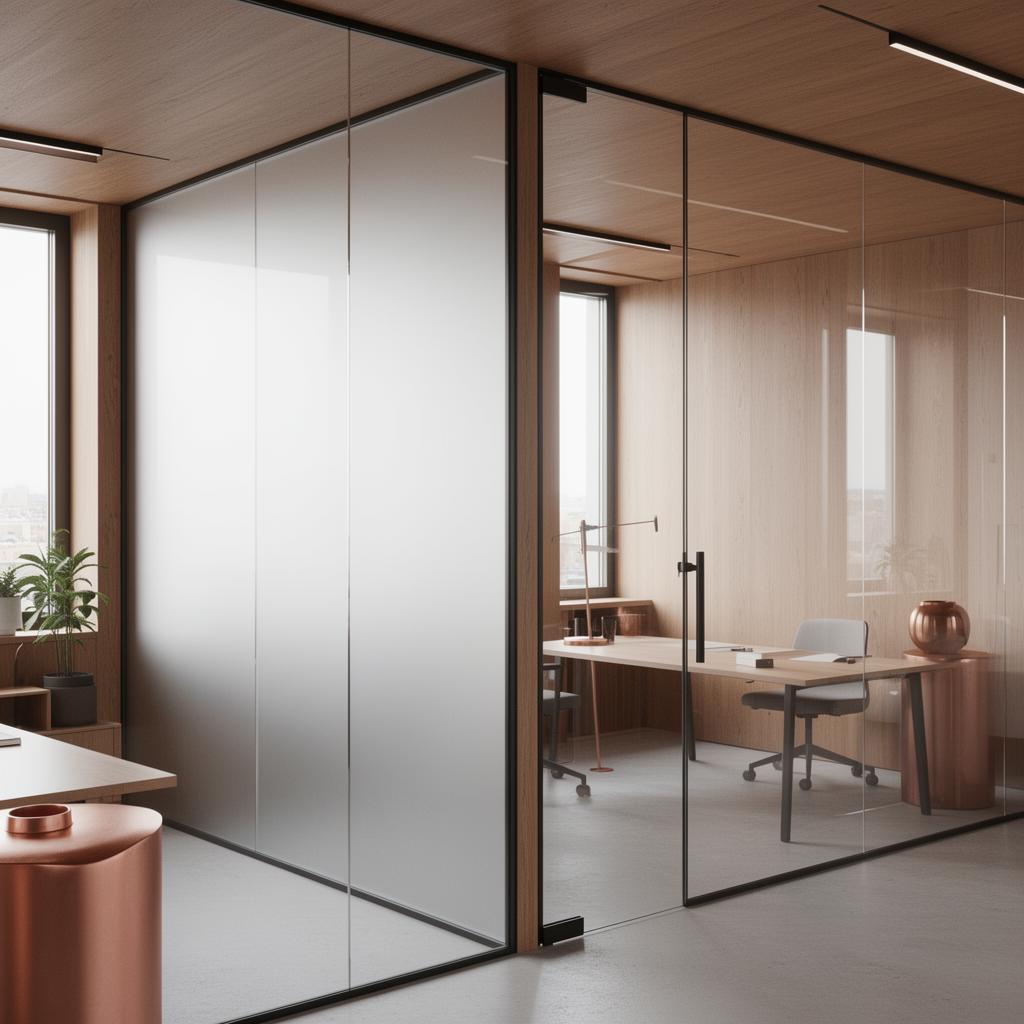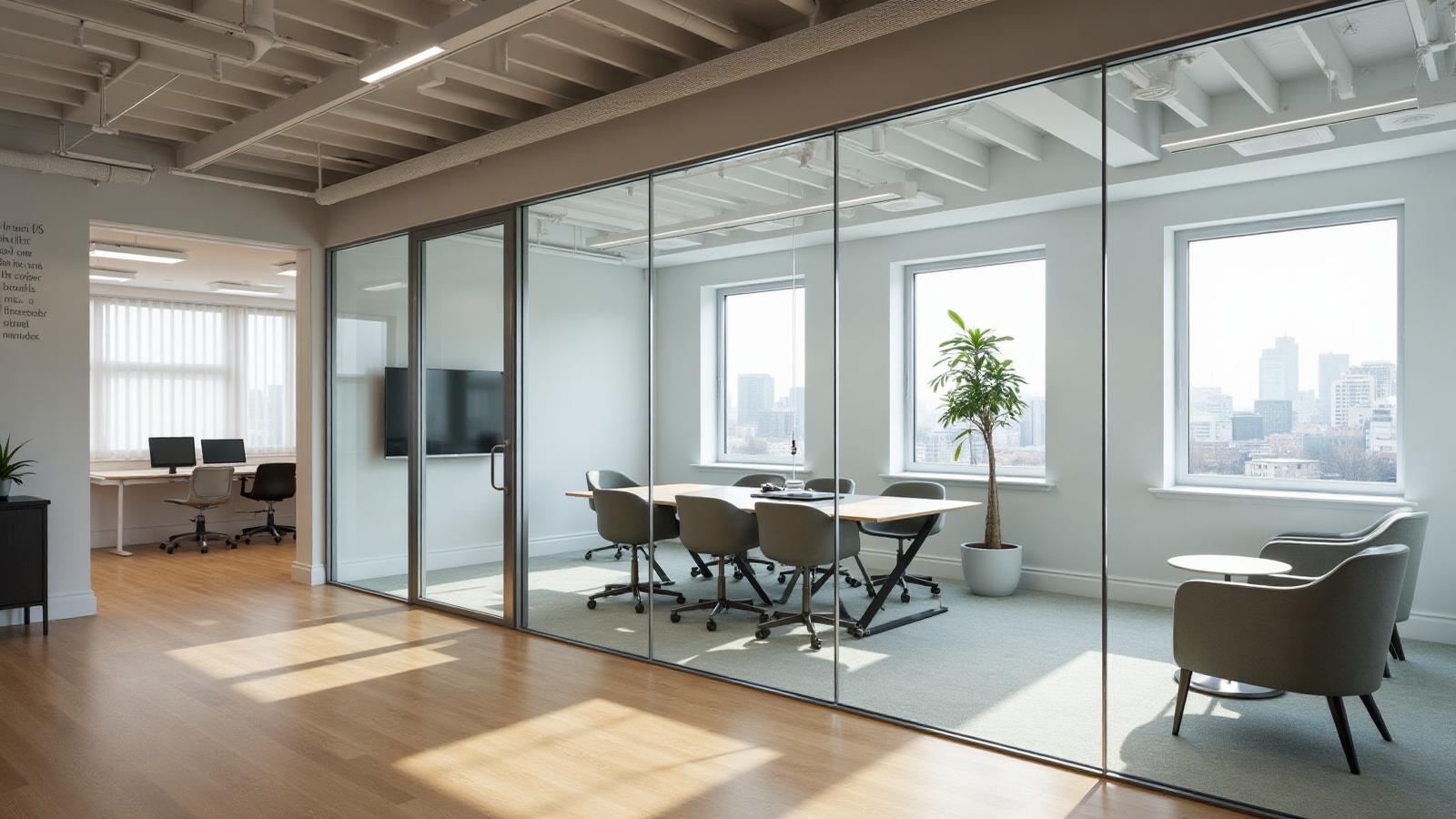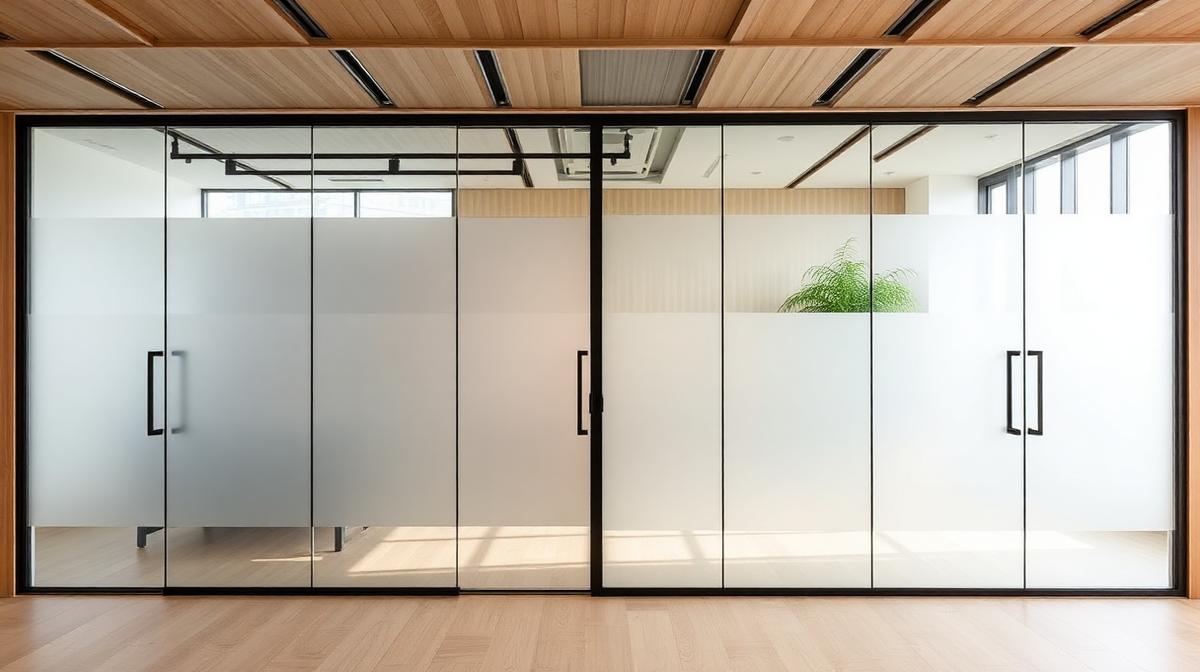
Frosted glass has long been the go-to solution for privacy in offices, bathrooms and hospitals. But 2026 marks a paradigm shift — switchable smart glass (PDLC) is challenging traditional frosted glass on every front. In this guide, we compare both technologies in detail and help you choose the right one for your project.
What is Frosted Glass?
Frosted glass is glass with a permanent matte surface that diffuses light and blocks visibility. It is manufactured through sandblasting, acid etching, or lamination with frost film.
The limitation: Frosted glass is static — it can never switch to transparent. If you want visibility, you must physically replace the glass.
What is Smart Glass (PDLC)?
Smart glass with PDLC technology is a thin film applied to existing glass that enables switching between transparent and frosted states in under 0.1 seconds with a button press, remote control, or app.
Comparison: 8 Decisive Factors
🔄 Smart Glass (PDLC)
- Flexibility: Freely switches between transparent and frosted
- Energy: < 3 W/m², blocks 99% UV
- Installation: Applied to existing glass
- Lifespan: 15+ years indoors
- Control: App, voice, remote, timer
- Projector: Can be used as projection surface
- Value: Significantly increases property value
- Cost: €150–350/m²
🧊 Traditional Frosted Glass
- Flexibility: Permanently frosted, cannot be changed
- Energy: None — but no UV control
- Installation: Requires replacing entire glass panel
- Lifespan: Permanent (but static)
- Control: None — always frosted
- Projector: Not possible
- Value: Standard, no added value
- Cost: €80–200/m²
Conclusion
2026 marks the year when smart glass definitively goes from niche to mainstream. With falling prices, increased awareness of energy efficiency and demand for flexible environments, there are fewer and fewer reasons to choose static frosted glass.
The only scenario where frosted glass is still the right choice is for permanent screening without any need for visibility — in all other cases, PDLC smart glass is the smarter choice.