There are several technologies that fall under the umbrella term "smart glass". The two most established are PDLC (Polymer Dispersed Liquid Crystal) and electrochromic glass. Both solve the need for dynamic light control — but in fundamentally different ways, with entirely different strengths and limitations. In this article, we untangle the differences in depth.
Fundamental Difference: Privacy vs Solar Control
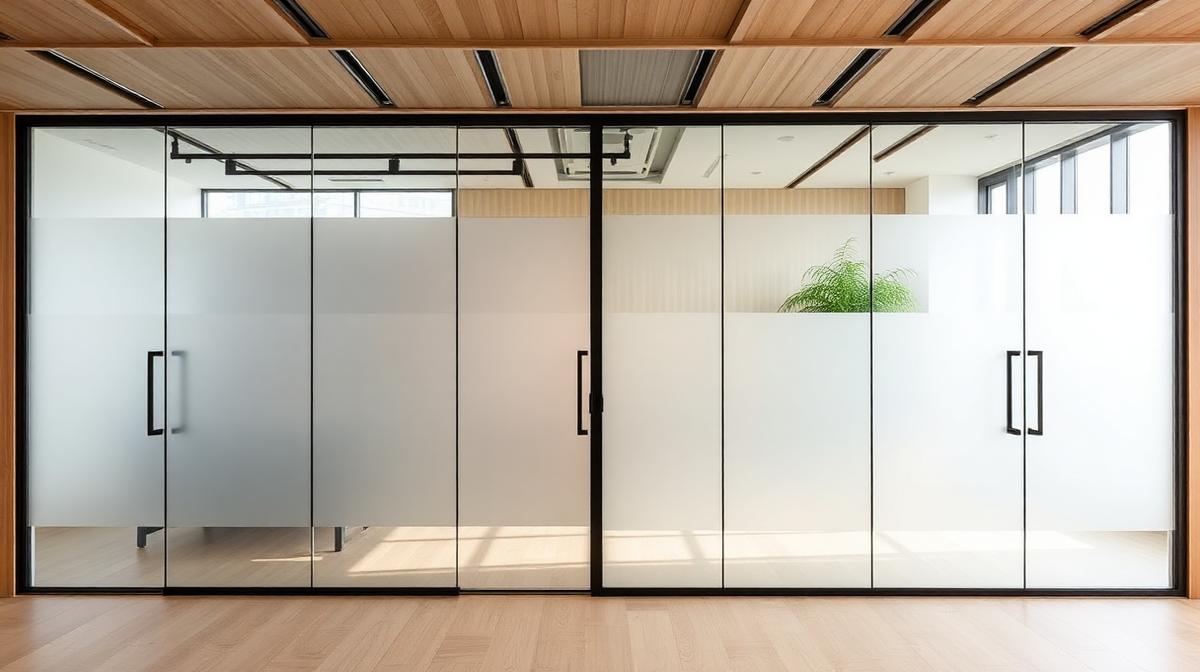
Before comparing details, we need to understand the fundamental difference. PDLC switches between transparent and frosted — it's fundamentally about privacy. You see through the glass, or you don't.
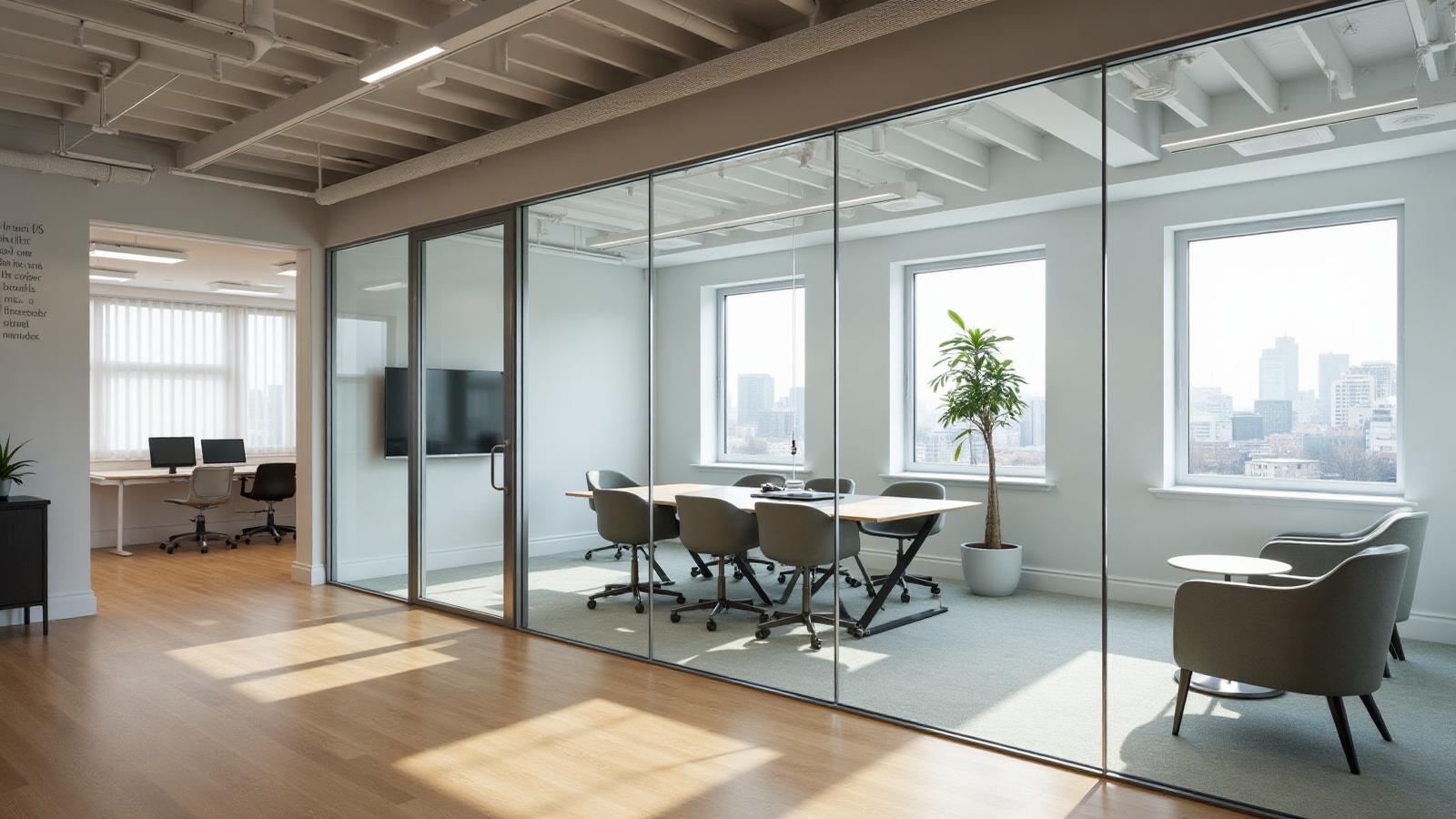
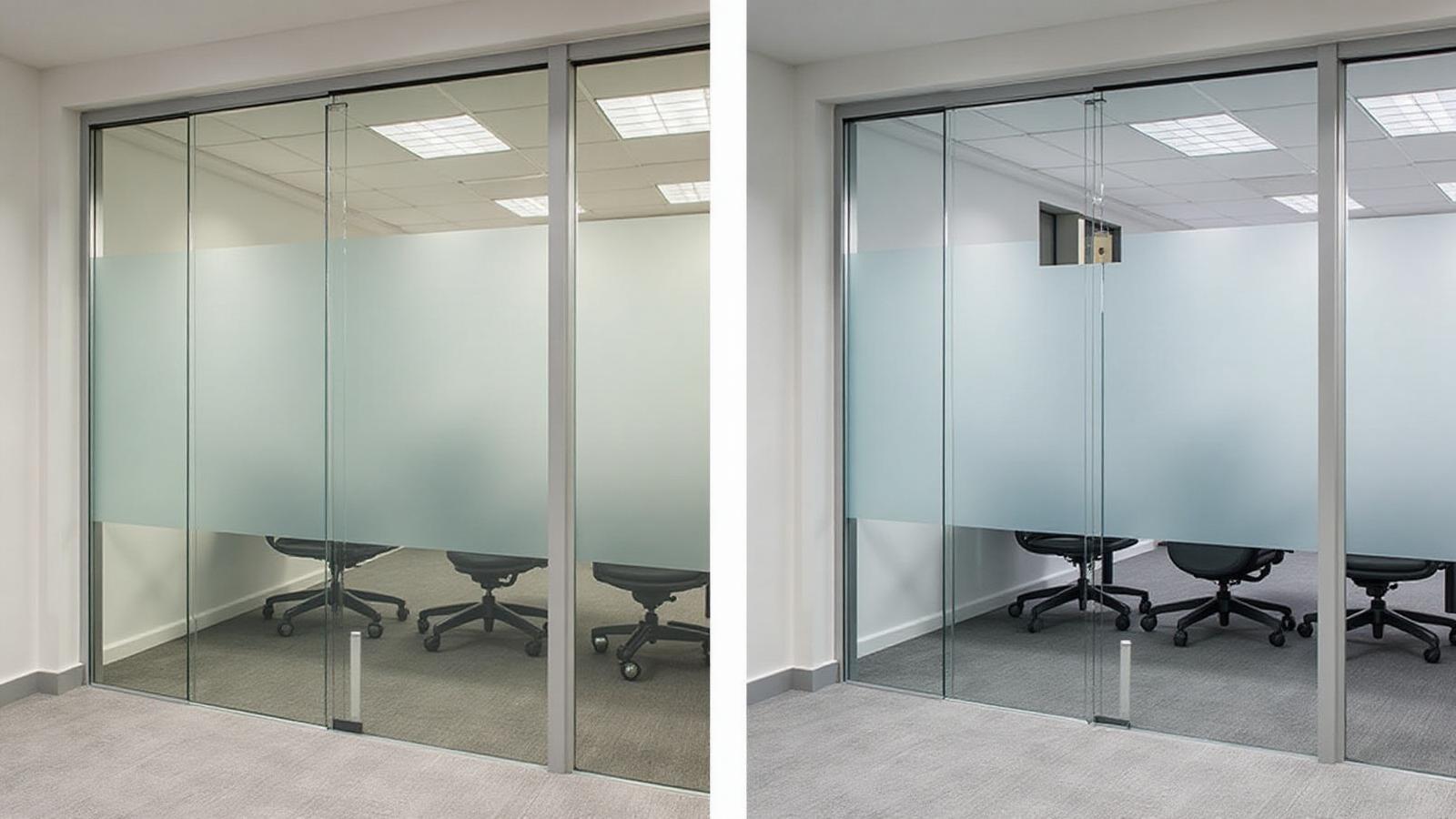
Electrochromic glass tints — it becomes darker or lighter, like sunglasses. You can still see through the glass in all states, but the amount of light and heat passing through varies. It's fundamentally about solar control.
This is the most important distinction to understand, and it often determines which technology choice is right for your project.
How Electrochromic Glass Works
Electrochromic glass contains thin layers of electrochromic materials (usually tungsten oxide) deposited on the glass under vacuum. When a small voltage is applied, lithium ions migrate into the electrochromic layer, changing the material's optical absorption properties. The glass gradually "tints" from clear to blue-grey.
The process is electrochemical — a chemical reaction driven by electricity — unlike PDLC which is electro-optical (a physical change in light scattering). This difference in mechanism explains the dramatic difference in switching speed.
Comparison: Point by Point
1. Switching Speed
PDLC: < 0.1 seconds. Instant in practice. You press the button, the glass changes. There is no visible transition period.
Electrochromic: 3–20 minutes. Depending on glass size, temperature and age. Large glass panels can take even longer. At cold temperatures (below 5°C), the process can almost stop completely.
2. Privacy Level
PDLC: Blocks direct view in frosted mode. Light still passes through (~55% transmission), but detailed visibility is 0%. You cannot see through the glass — not even outlines of people in the room.
Electrochromic: No complete privacy. Even in its darkest state, the glass remains partially transparent. You can always see silhouettes and movement through it.
3. Cost
Self-adhesive PDLC film: €150–350/m² including film and transformer. Installation can be done by any tradesperson with proper instructions.
Electrochromic glass: €500–2,000/m² depending on size and manufacturer. The glass must be ordered as a finished unit with integrated electronics and installed as a complete window.
The cost difference is 3–6x, and PDLC's retrofit capability also eliminates the cost of replacing existing glass.
4. Solar Control
Electrochromic: This is where electrochromic glass excels. It can reduce solar heat gain (SHGC) from ~0.40 to ~0.09, meaning up to 90% of solar heat is blocked in tinted state.
PDLC: Does not block heat in the same way. PDLC scatters light in frosted mode but still transmits thermal radiation. UV is blocked up to 99%, but IR radiation passes through largely unaffected.
Choose the Right Technology
Choose PDLC when you need:
- ✓Strong privacy (meeting rooms, bathrooms, healthcare)
- ✓Instant switching with no wait time
- ✓Retrofit on existing glass
- ✓Projection surface in frosted mode
- ✓Cost-effective solution
Choose electrochromic when you need:
- ✓Dynamic solar control in glass facades
- ✓Thermal insulation and energy savings
- ✓Gradual tinting without complete blocking
- ✓New construction projects with long planning horizons
Summary
PDLC and electrochromic glass are not competing technologies — they solve different problems. PDLC is about privacy and flexibility. Electrochromic glass is about solar control and energy efficiency.
For most indoor projects — offices, homes, healthcare, retail — where privacy, fast switching and cost-effectiveness are critical, PDLC is the stronger choice. Electrochromic glass is superior in buildings with large south-facing glass facades where solar heat gain is the primary concern.